


How to find affordable outdoor gear: Used, secondhand & rental options

Updated: May 25
Outdoor gear can get expensive fast. Trust me, I get it. Buying used outdoor gear is one of the best ways to make camping and hiking more affordable without sacrificing quality.
So, before spending hundreds or thousands of dollars on camping and hiking gear, here's what I would recommend:
Use what you already have first
Borrow gear from friends, family, or coworkers
Rent expensive or specialty gear
Shop secondhand before buying new
Check local thrift stores and gear exchanges
Support local outdoor shops when you can
You do not need a perfectly curated setup to be outdoorsy. Don’t let social media fool you. You just need to get outside comfortably and safely.
How to find affordable and used outdoor gear
It’s that time of year again. The weather starts warming up, people start pulling camping bins out of the garage, and suddenly, social media is full of “must-have” gear lists for summer adventures. Everyone’s talking about the latest and greatest gadgets. And suddenly, your trusty yet ancient tent is looking tired and old. But please hear me when I say this: Do not let the comparison game of social media trick you into spending money you don’t need to spend!
Every year, I see people feeling like they need to spend a fortune before they’re “ready” to camp, hike, backpack, bike, or just spend time outside in general. You don’t. Most outdoor gear is designed to last for years.
And even if you’re a beginner just starting out and reading this, you don’t need to go out and buy a ton of stuff so that you’re “ready.” Nine times out of ten, you can get outdoors safely and comfortably without spending a dime.
Why is outdoor gear expensive?
I saw a post the other day talking about how camping gear is so expensive and encouraging people to shop at SHEIN instead. Please don’t do this.
Look, I get it. Camping and hiking gear is expensive. And the cost of high-quality outdoor gear can often be a prohibitive barrier for folks wanting to get into the outdoors. This sucks, of course, but there’s a reason good outdoor gear is expensive. It’s supposed to endure dirt, rain, snow, sun exposure, rough terrain, and repeated use. A quality backpack, sleeping bag, camp stove, or tent should not need to be replaced every single season. It should last you years and years (if not your lifetime!). So, it ends up being worth the steep upfront cost.
But please don’t let this discourage you from getting outdoors. Just because gear is expensive doesn’t mean you have to spend a million dollars. Hear me out.
Before you buy anything new, pause for a second and ask yourself a very simple question: Do I actually need this?
Not “would this be nice to have.” Not “did I see someone on TikTok using it.” Not “would this make my setup look cooler.”
Do you genuinely need it?
Because there’s a good chance you already have more than enough to get started.
For example, unless you need something ultralight, you probably do not need a dedicated camp mess kit for car camping. You can bring plates, bowls, utensils, and cookware from your kitchen. You probably already own layers that work for hiking. You may already have blankets, coolers, flashlights, backpacks, water bottles, or rain jackets sitting in your house right now.
Outdoor culture can sometimes make it feel like participation requires constant consumption. It doesn’t. You also might feel like you need to “look the part.” But you just need to go outside.
See what outdoor gear you can borrow from friends, family, coworkers, etc., first
I am fully convinced that almost everybody knows someone with outdoor gear collecting dust in a garage, closet, basement, or storage unit.
Before buying ANY gear, ask your:
Friends
Family
Coworkers
Neighbors
Local community groups
You would be shocked how many people have tents they haven’t touched in years, extra sleeping bags, camp chairs, hiking poles, coolers, backpacks, snowshoes, camp stoves, and more.
A lot of people buy outdoor gear with the best intentions and then only use it once or twice. Or they decide camping or hiking just isn’t for them. Since the resale marketplace can be a muddy place to navigate, a lot of people just hang onto this stuff. Or they keep it thinking, “well, maybe one day I’ll use it again.”
This is also where Buy Nothing groups and neighborhood Facebook groups can be incredibly helpful. People are constantly giving away outdoor gear or selling it cheaply just to clear space.
Another critical piece here: Borrowing gear is also one of the best ways to figure out what you actually like before investing your own money. You may discover that you hate a certain backpack style or that you prefer a different type of sleeping pad. Testing gear first can save you a lot of money long term! This is HUGE!
Rent big-ticket outdoor gear items instead of buying
Rentals are one of the most underutilized resources, especially for beginners. And I kind of think that’s just a marketing issue. A lot of people just don’t even know this is an option.
If you only camp a few times a year, you may not need to own everything. Renting can also make a lot more sense for expensive or highly specialized gear.
Some of the most common rental items include:
tents
sleeping bags
backpacks
camp stoves
snowshoes
skis
bikes
kayaks
climbing gear
Renting is also a great option if:
You are trying out a new activity (for example, you should rent snowshoes the first time you go, because you might find out you don’t like snowshoes or the ones you rented were the wrong size)
You are traveling a lot and don’t want to haul bulky gear around with you
You live in a small apartment, van, RV, et.
You do not want to store bulky gear (even if you have a house, it can be a pain in the ass to store a bunch of big stuff)
You are still figuring out what works for you
Just like what we were saying about borrowing gear from friends, the same goes for rentals. It’s a safer, lower-cost way to try different things without the commitment. You might find you LOVE something and want to buy it for yourself, but you might also find out you HATE it.
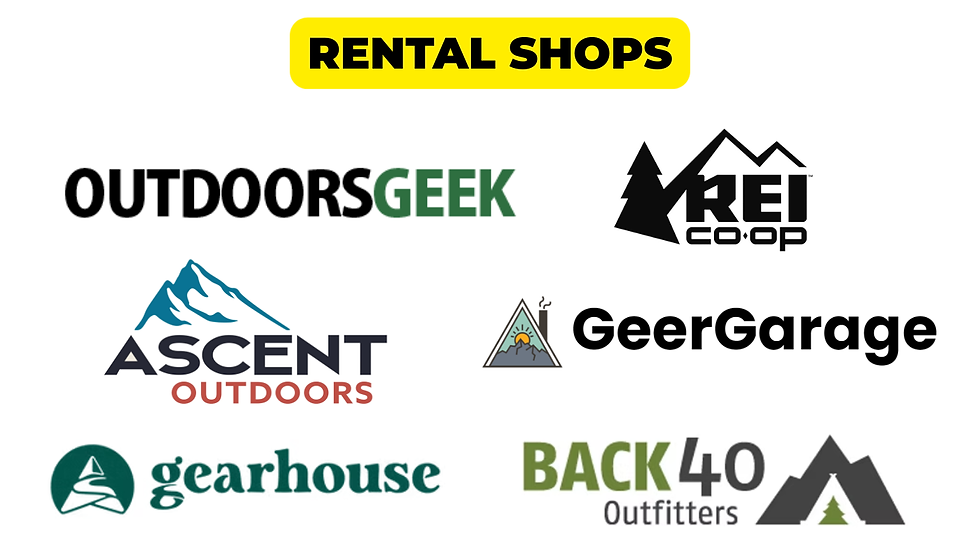
Where to rent camping and hiking gear
National options:
REI Rentals (please wait until the boycott is over to shop REI)
Your local library might have rental options too!
Western Washington and Seattle area:
Most of our major universities in the state offer gear rental programs for students
There are honestly so many in Washington state - just Google “outdoor gear rental,” and you’ll get a ton of options
Sometimes, local trail nonprofits and organizations (like Washington Trails Association) will also have gear libraries!
If you live near a local gear shop, check their website or call them directly, because you might be surprised. A lot of smaller stores offer rentals that people simply do not know about or they’re just not great about advertising.
Buy used outdoor gear before buying new
Secondhand outdoor gear is one of the best ways to make the outdoors more affordable and accessible. There are sooooo many places to find used gear now, both online and in person. Some people are selling barely-used gear for a fraction of the original price. Other folks are clearing out garages after realizing camping is not really their thing.
Best websites for used camping and hiking gear
Dedicated used outdoor gear sites:
REI Re/Supply (please wait until the boycott is over to shop REI)
Wonderland Gear Exchange (Seattle)

You can also shop general secondhand marketplaces:
You can also search for:
Local gear swaps
Outdoor consignment stores
Facebook gear exchange groups
Hiking and backpacking community groups

Thrift stores can be absolute goldmines for outdoor gear if you are willing to look consistently. You don’t have to only shop at these specialized spots. You can often find items that can be repurposed for outdoor endeavors in these places too (like super cheap plates for a mess kit, etc.).
Check places like:
Local thrift stores
Estate sales
Garage sales
I’ve seen so much good stuff over the years. You never know what you’ll find.
There are a few items you should NOT buy used, though
Some gear is completely fine to buy secondhand. Other gear deserves a little more caution, especially when it comes to highly technical gear or things that are responsible for your safety/well-being.
I would be careful with:
Old climbing ropes
Climbing harnesses
Heavily damaged helmets
Cracked fuel canisters or stoves
Heavily worn hiking boots
Anything with mold or major water damage
Anything that requires waterproofing
Especially for tents and sleeping bags, inspect them carefully before purchasing. Check zippers, seams, waterproof coatings, poles, and signs of mildew.
If you must buy new, shop small and local
If you do need to buy something new, I always encourage people to check local outdoor shops first when possible.
Small outdoor gear shops are often staffed by people who genuinely know the local trails, weather conditions, AND gear. They can give you the best recommendations super tailored to your needs. Many of these spots also host community events, classes, repair services, and gear swaps, so keep your eyes peeled for those as well.
Shopping local helps support the outdoor community where you actually live, as well!

Frequently asked questions about used outdoor gear
Is used camping gear safe?
Usually, yes. Most outdoor gear is built to last for years. Just inspect it carefully before buying and avoid heavily damaged safety equipment.
Where can I buy used outdoor gear?
Some of the best places include Facebook Marketplace, OfferUp, Patagonia Worn Wear, REI Re/Supply, Geartrade, thrift stores, and local gear swaps.
Is renting camping gear worth it?
Absolutely, especially for beginners or people who only camp occasionally. Renting lets you try gear before investing in expensive equipment.
What outdoor gear should I buy new instead of used?
Safety-related gear like climbing ropes, damaged helmets, or worn-out hiking boots may be worth purchasing new depending on their condition.
What’s the best website for used hiking gear?
Facebook Marketplace and OfferUp are great for local deals. Patagonia Worn Wear, Geartrade, and REI Re/Supply are excellent for more curated options.
Final thoughts
Outdoor recreation has become deeply tied to consumer culture. I mean, just look at how many outdoor influencers (myself included) have storefronts you can shop and affiliate links.
It’s not a bad thing that we talk about gear or that we get excited about the latest and greatest gadgets, tools, and gear. It’s part of the industry, and it’s natural. I’m not trying to demonize that at all.
But it’s important to talk about how a lot of people feel pressure to buy an expensive setup before they’re “allowed” to participate. And that pressure keeps people out and prevents them from participating altogether sometimes.
You do not need a perfectly curated campsite. You do not need a matching hiking outfit. You do not need to spend thousands of dollars to enjoy being outside.
Use what you already have when you can. Borrow gear. Rent gear. Buy secondhand when possible. Start small!
The outdoors belong to all of us. I want everyone to get out there in a way that’s affordable and accessible to them!


Comments